
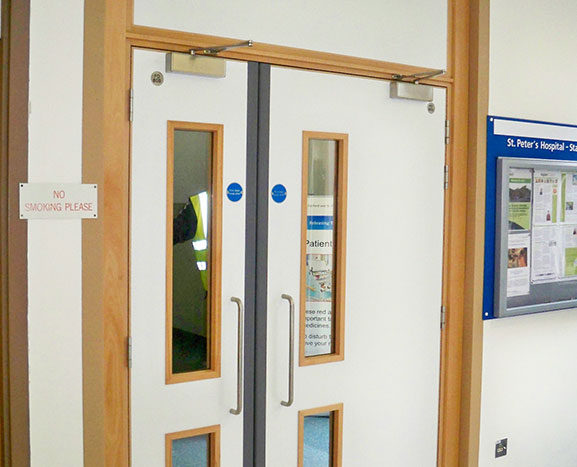
A recent article by Neil Ashdown MAFDI, FSIDip and chair of the Affiliation of Fire Door Inspectors attempts to clarify fire door compliance. In light of the tragedy of Grenfell Tower in 2017 resulting in seventy-two people losing their lives, fire safety in buildings has become far more important, more so than seen before in modern times.
The focus on fire safety and fire door compliance has spawned a plethora of businesses offering services claiming to improve compliance in various areas of fire safety but what does ‘compliance’ in relation to the suitability of fire doors and escape doors in buildings.
What is a compliant fire door or fire door compliance?
We are often told that the gap around the door leaf must be 3mm for compliance. As the AFDI state, the answer could be yes or no. We are also told that if a ‘Third Party Certificated Installer’ fits the fire door then it’s compliant. (“Fire Doors: what IS compliance? – The Affiliation of Fire Door Inspectors”) Again, that might be the case and it might not be.
New doors in a new building
It we start with new doors in a new building, compliance is easily defined and measured.
Appendix C of the Building Regulations Approved Document B covers with requirements in terms of fire-resistant doors and fire doors and the associated components supplied which should be traceable to evidence of fire resistance and restricted smoke spread performance.
So long as the components, materials and installation works are inspected by a suitably competent person then compliance is confirmed measured against the relevant regulations, standards and certification.
Where a professional fire door inspector is employed, then a full report would be provided and this would prove especially valuable where the installation contractor is required to rectify any issues before the terms of their contract are fulfilled.
New doors in an existing building
Compliance can be less clearly defined here but the good news is that the fire doors and associated components would be traceable to evidence of fire resistance and restricted smoke spread performance. Issues can arise where existing issues at the building might affect installation work. These issues might include floors not being level causing compliance with smoke sealing requirements at the threshold. Or these can be compromised by supporting walls not being plumb which results in door frame installation requirements being compromised.
What might happen in such circumstances will depend on the competence of the installer and whether a professional fire door inspector is consulted on these matters.
Existing doors at an existing building
Where fire doors were installed when the building was first constructed there should have been no reason they wouldn’t comply fully with the relevant regulations and standards. However, once the building is occupied and the doors put to daily use that full compliance can be lost.
What actually is fire door compliance in an existing building
An existing building is subject to daily use including the atmospheric conditions at the building and general wear and tear. Can we expect the doors to be in a similar state to when the building was new, say two or three years later? The answer is they would not.
So, we get a fire inspector to conduct periodic checks as recommended in BS9999 and BS8214 guidance and they find defects such as worn smoke seals, ineffective door bottom seals and door to frame gaps larger than required.
Their job is to report the defects they find to the building operator, but as they are not “fire door safety police, they neither have the power nor should have the power to insist on defects being rectified. They should not make recommendations that are inappropriate to the defects they find because too often some inspectors recommend that new doors are fitted when actually there is no need for this.
What should happen is that the building operator and the fire door inspector should decide which fire doors are most critical to life safety and also property protection and the inspection programme should be decided based on that risk-based assessment.
It is often the case that some fire doors are more critical than others dependent on location in the building so where the fire door inspection report provides details of a defect and what remedial action is necessary, the building operator should decide whether that defect needs to be dealt with urgently or whether the risk presented is minimal in terms of life safety or property protection.
Fire door inspections and the reports
A professional fire door inspector should provide a comprehensive report detailing their findings.
The report needs to list all doors inspected in easy-to-read text and whether they are compliant or non-compliant to the requirements of the Standard BS 8214: 2016 Timber-based fire doors – code of practice. It needs to be noted that there are currently on such standards for composite fire doors and metal fire doors.
Where defects are found the inspector should describe the defect clearly using laymen’s terms and describe the remedial action necessary to rectify the defect. If your fire door inspector fails to do that, then their report is unsuitable.
The way forward
A responsible building operator should make sure that fire doors and escape doors in their buildings have periodic inspections at intervals suitable to the use of the building, fire risk at specific locations in the building, the fire strategy at the building and the use and importance of the doors in the building.
Article 17 of the Fire Safety Order places a legal obligation on the Responsible Person at the building to ensure that fire safety devices are maintained in a suitable and effective condition.
For fire doors, this could be something as simple as replacing a smoke seal or as time-consuming as replacing the glazing or re-installing the door.
Professional fire door inspectors don’t like to see building operators tasked with obligations that are incredibly onerous, so risk assessment is essential in prioritising remedial works and considering how critical the fire door is to the overall fire strategy.
A professional fire door inspector will assist building operators with door replacement programmes and recommend the most suitable types of door construction and components for installation on top of inspecting the installation contractors’ works. A fire door inspector provides extremely useful information and services to help the building operator achieve compliance and value for money.